Amazon ungating services: what they do, the risks, and the free route
A paid Amazon ungating service offers to get your account approved for a gated brand or category. Help with an application built on your own invoice is fine. An invoice from a supplier you never bought from, or an edited one, can get your account deactivated. The free route: buy from the brand or an authorized distributor and apply yourself.
- Nobody can sell you an approval. Amazon decides every application, and the application goes in from your account, in your name, whoever presses submit.
- Paying for help isn't the problem. What gets submitted is. Your purchase, a real supplier of the brand, that supplier's own documents, and your say on what goes in: if any of those belongs to someone else, walk away.
- When a third party acting as an ungating service submitted falsified invoices for a seller, an Amazon staff member said the deactivation that followed was the consequence, and called that kind of violation one of the more egregious.
- Never give anyone your Seller Central password. Amazon staff say outside service providers get their own access as authorized partners.
- The free route costs a real first order from the brand or one of its distributors. That's stock you wanted anyway, and its invoice is the one you apply with.
Look for help getting ungated and the offers arrive fast: agencies, freelancers and course sellers who say they can get your account approved in a category, or in a brand you were turned down for. If you've just had an application denied, or you're looking at a price list full of products that are gated for your account, paying someone to make the problem go away is tempting.
This guide explains what those services actually sell, which kinds of help are fine to pay for, why a fake or edited invoice is one of the quickest ways to lose a selling account, and how to get approved yourself without paying anyone a fee. We don't name or rank services. The test below works on any of them.
Where our Amazon quotes come from. Amazon's approval page, anti-counterfeiting policy and Business Solutions Agreement need a Seller Central sign-in, and we couldn't open them to check their current wording, so we quote pages anyone can open: Amazon's sell.amazon.com guides and Amazon staff replies on the US Seller Forums, which answer one seller's case and serve as guidance, not policy. The Sources list says which is which.
What ungating services sell
When we looked through the offers that come up for "Amazon ungating service," they fell into four groups. Many providers mix them.
- Done-for-you applications. The provider says it will prepare the documents, submit the application through your Seller Central account and answer Amazon's follow-up questions. The fee is often quoted per brand or per category, sometimes with part of it due only on approval.
- Invoice packages. You buy a small order from a supplier the provider works with, and the invoice from that order goes into your application.
- Document reviews and coaching. Someone checks your own invoice against Amazon's requirements, walks you through the form, or helps you reply after a denial.
- Lists. Brands said to be "auto-ungated," or easy to get approved in. Approval differs from one account to the next, so another seller's list says little about yours. Our guide to gated brands and auto-ungate lists explains why.
None of them can sell you an approval, because only Amazon gives one. What you are really paying for is either help with your own application, or documents.
So read the wording closely. "We prepare the invoices" can mean "we check the invoice your distributor sent you." It can also mean "we produce an invoice for you." The first is help. The second is the risk this page is about.
What is legitimate and what is not
Amazon's own guide to finding wholesalers starts from authenticity, and everything an application asks for follows from it:
That gives you a simple test. An approval rests on four things: your own purchase, from a real supplier of the brand, on documents that supplier issued to you, sent in with your knowledge. Help that strengthens those four is fine. Anything that stands in for one of them isn't.
| What a service offers | Fine? | Why |
|---|---|---|
| Checking your own invoice against Amazon's checklist before you upload it | Yes | It's your purchase and your supplier's document. A second pair of eyes catches a name or a date that doesn't match |
| Finding a brand's authorized distributors and helping you open accounts in your business name | Yes | The invoices that follow are real, and they trace back to the brand |
| Drafting the email that asks a brand for a letter of authorization | Yes | The brand decides whether to write the letter |
| Helping you reply after a denial, with your real documents | Yes | You read it, and it goes in from your account with your approval |
| Selling you a small order from a distributor of the brand, shipped to you and invoiced to your business | It depends | It's a real purchase only if the supplier really distributes the brand and the goods really arrive. Ask the questions below first |
| An invoice from a supplier you never bought from | No | Amazon asks for your purchase invoice. One for a sale that never happened is a false document |
| Editing an invoice: the date, the quantity, the brand or the buyer's name | No | Amazon's rules for sourcing documents let you remove prices and circle the product under review. Nothing else changes |
| An invoice made out to someone else, or "matched" to your business name | No | It isn't your purchase |
| Submitting documents you haven't seen | No | The application goes in from your account, and it's yours whatever is attached |
| Your Seller Central password, or your two-step verification codes | No | Amazon gives outside providers their own access instead (see below) |
Small orders through a service: what to ask first
Some services sell a real order: you pay, a supplier ships you the units, and the supplier invoices your business. That can be a sound first purchase. It can also be a reseller's invoice made to look like a distributor's, at a price well above what the stock is worth. Before you pay, ask:
- Who issues the invoice? It should come from the supplier that sold you the goods, under that supplier's own name and address, not from the service.
- Is that supplier the brand, or one of its direct distributors? Amazon's wholesaler guide suggests checking a supplier's business license and its brand authorization letter. Ask to see both.
- Is the order in your exact legal business name and address, the ones on your selling account?
- Do the units ship to you, or to your prep center, and arrive?
- Would you buy those units anyway, at that price, and sell them in a reasonable time?
If the answer to any of the first four is no, or the service won't say, you aren't buying stock that comes with an invoice. You're buying an invoice. And if the fifth is no, part of what you're paying for is paperwork.
Never hand over your login
A done-for-you application is submitted from inside your Seller Central account, so the provider needs a way in. Amazon's own advice on giving anyone access starts with one line. In a staff post on the US Seller Forums about user permissions, the first tip is: "Don't share your password with other people." The same post says outside contractors and companies should be added as authorized partners, from the Authorized Partners tab under Global Account, not as users on your account, and that every user should get only the permissions their job needs.
That isn't only about rules. Once someone else is inside your account, things can be submitted in your name that you never see.
Stef, who teaches Apex University, makes the same point in The Checklist, the lesson on the setup new sellers finish before buying anything:
"Make sure that all the logins, passwords are safely secured."
From Stef's lesson (The Checklist, at 6:57)
Why fake invoices end accounts
A denied application costs you one product. A fake document puts the whole account in question, because it turns "not enough proof" into a question about deception.
It's your account, whoever pressed submit. In the thread above, an Amazon staff member stepped in. He said the seller had hired a third party acting as an ungating service, that it had submitted falsified invoices on the seller's behalf, and that the deactivation was a consequence of that third party's actions. He called falsified invoices "one of the more egregious" kinds of policy violation, which makes the plan of action the hardest kind to write. That reply is several years old and answers one case. It still shows where the consequence lands: on the account the application came from.
Amazon can check the paper. Amazon's requirements for sourcing documents, as an Amazon staff member quoted them on the US Seller Forums (thread), ask for contact details for your suppliers and the original manufacturer, and say: "We may contact suppliers or manufacturers to verify the documents." Those requirements are for proving where products you already sell came from, and Amazon's public pages don't say whether approval reviewers make the same calls. Either way, an invoice from a supplier that has never heard of you is one phone call from falling apart.
The problem follows you after approval. Say a fake invoice gets through. Now you sell the product, and every unit you sell needs a real source. The same sourcing requirements say the documents should reflect your sales of the product across all Amazon marketplaces in the last 365 days, and trace it back to the original manufacturer. An invoice for 10 units that never shipped can't cover the units you go on to sell. And if the stock you do sell came from somewhere that couldn't give you a proper invoice in the first place, you still can't show where it came from.
Deactivation reaches your money and your stock. Section 3 of Amazon's Business Solutions Agreement lets Amazon suspend an account at once when it determines the account has been used for deceptive, fraudulent or illegal activity. A deactivated account can't sell, including the stock already in FBA, and Amazon can hold your payouts. Our Section 3 guide covers what that does to your money and inventory, and what to do if you're suspended covers the appeal.
Apex for Amazon Sellers is free to install, and its numbers open when you finish Apex University. Create a free account, work through the lessons, then install it from the Chrome Web Store.
Is any help worth paying for?
Yes, as long as what you pay for leaves your purchase, your supplier and your documents real.
Amazon keeps its own directory of providers. Amazon's Service Provider Network lists outside providers that Amazon says it vets and keeps monitoring, in categories from account management and compliance to imaging and taxes. There's no ungating category on that list. Amazon also says it "does not endorse any service provider or its services," and that if you hire one, you contract with that provider directly. So a listing tells you a provider met Amazon's standards to be listed. It doesn't make whatever it submits for you safe. Use the same test.
Help that is usually worth the money:
- A review of your own documents before you submit: the invoice, the name on it, the date, the quantity, the product.
- Sourcing help that finds a brand's authorized distributors and gets accounts opened in your business name. That help pays off long after one approval.
- An assistant who prepares applications with your documents, through access you grant as Amazon describes, where you see everything before it goes in.
- The inventory itself. The real cost of the free route is a first order, and that money comes back as stock you can sell.
- Help after something has gone wrong. If you're already facing a suspension, our suspension guide covers when professional help makes sense and what to look for.
- They tell you whose invoice will be used, and it comes from a supplier you bought from yourself.
- They show you every document before it is submitted.
- Nothing will be edited, retyped, combined or "matched" to your business name.
- They don't ask for your password or your two-step verification codes.
- They don't promise approval. Only Amazon decides.
- Their fee isn't for documents you will never see.
- You would be comfortable explaining exactly what they did to Amazon, in writing.
How to get approved yourself
The route that costs no service fee is the same one every legitimate service is helping you with. It takes longer the first time, and it gets faster, because each real purchase leaves you with a supplier and an invoice you can use again.
- Check the exact product first
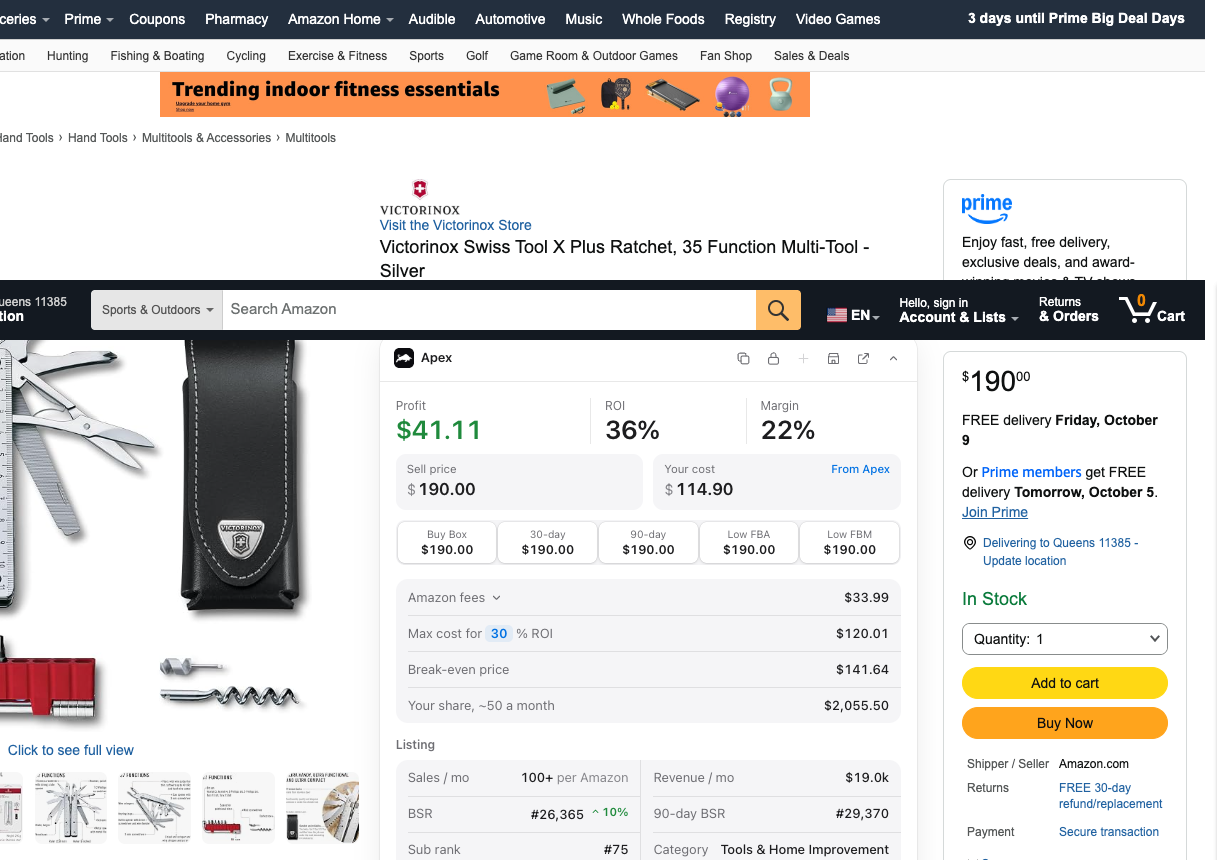
In Seller Central, go to Catalog, then Add Products, and search the exact product you want to buy. If it needs approval, you'll see Show limitations, and if an Apply to sell button appears, you can apply. Our guide to getting ungated covers each result you might see. If you use Apex's Chrome extension with your Amazon account connected, its Check if you can sell it button asks Amazon the same question from the product page. It's free to install, and its numbers open when you finish Apex University.
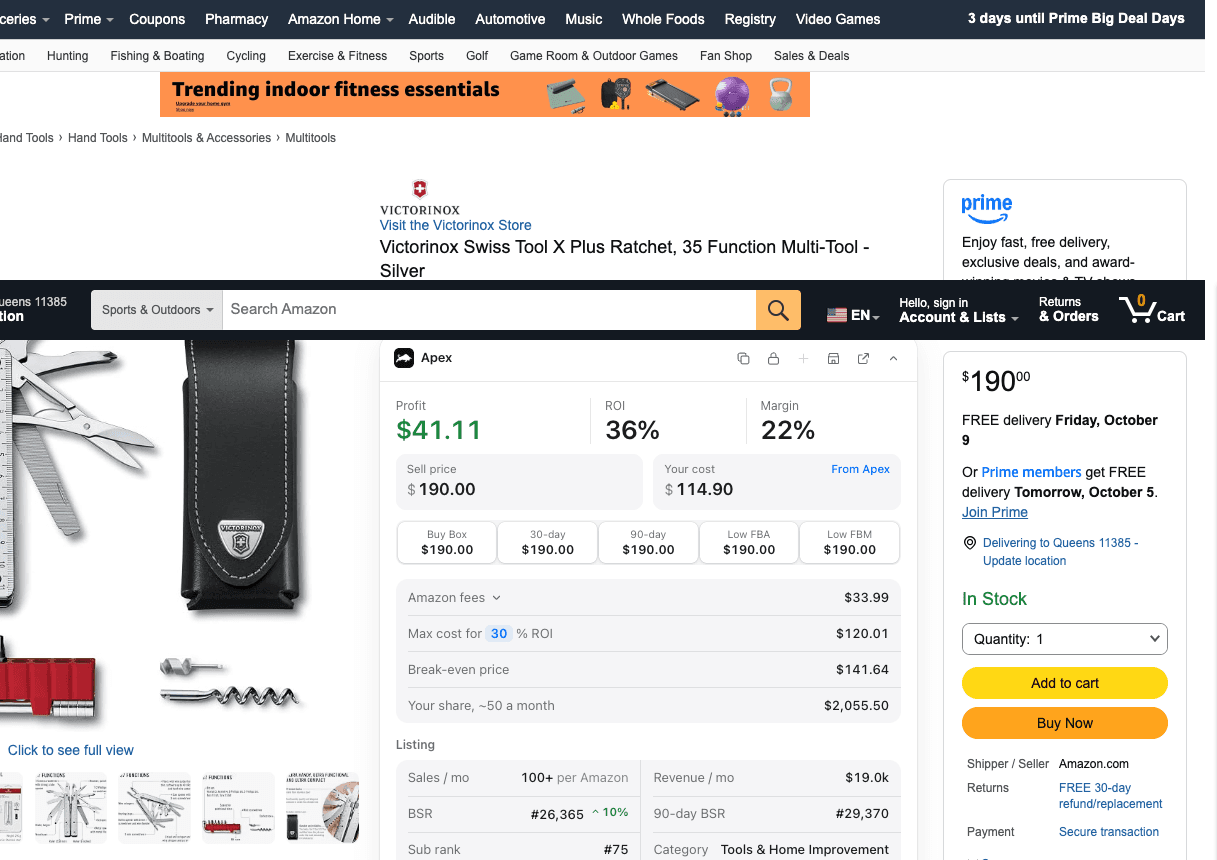
Apex's extension on an Amazon product page. The lock button in the row along the top runs Check if you can sell it. - Read the application before you buy
Open Apply to sell and read what this product, brand or category asks for from your account. Amazon's public checklist is the floor, and your own form has the final word. Amazon's help page on categories and products that need approval explains the process; it needs a sign-in, and we couldn't open it to check its current wording.
- Find who supplies the brand
Many brands won't sell to a new reseller directly, but they can point you to the distributors they supply. In Apex University's Finding Suppliers lesson (at 4:17), Stef's approach is to ask the brand who it supplies that you can buy from. Our wholesale suppliers hub covers finding and vetting distributors, how to find brands to wholesale covers the brand side, and the Distributor Vault lists US distributors by name.
- Open the account in your exact business name
Use the legal business name and address on your selling account, character for character, so every invoice comes out matching. Our guide to opening a wholesale account covers the paperwork suppliers ask for.
- Order stock you would sell anyway
Buy at least the quantity your application asks for, of a product that passes your profit check at today's price. The price list guide shows how to find those products, and the first wholesale order guide covers sizing the order.
- Upload the supplier's original invoice
Check it line by line first. Our invoice requirements guide has the checklist. You may remove prices and circle the product you're applying for. Everything else stays exactly as your supplier issued it.
- If you are denied, fix the cause and reply
Read the notice, fix the one thing it names, and reply on the same application with new or additional documents. The invoice guide's section on what to do if your application is denied covers the usual causes.
- If the brand is the block, go to the brand
Some brands only want their own approved resellers on their listings, and no invoice changes that. Ask the brand for a letter, or move to a product you can sell today. Our letter of authorization guide covers who can issue one and how to ask.
What the free route costs
No service fee, but not nothing. It costs your time, a real first order, and sometimes a brand that says no. Compare what each option leaves you with. A service fee buys an application, and if its documents aren't yours, a risk. A first order buys stock you can sell, a supplier you can reorder from, and the invoice you apply with.
And not every product needs approval. While you work on the gated ones, build your first orders from the products on your supplier's list that are already open to your account. Our ungating guide covers what you can do before you have an invoice.
If you already paid a service
If a service has already applied for you, or still has access to your account, work through this calmly and in order.
- Find out exactly what was submitted. Ask for a copy of every document they uploaded, and compare each one with what your supplier actually sent you. In the deactivation thread above, the Amazon staff reply advised the seller to talk to the third party and understand fully what it had done.
- Take back your account. Change your password, switch on two-step verification, and remove any user or partner access you gave them. Stef's advice in Apex University (The Checklist, at 2:36) fits here: treat the account like a bank account.
- If the documents were your supplier's real ones, there is nothing to undo. File copies with the order they came from, and reuse them next time.
- If they weren't, stop the service from submitting anything else, keep a record of what was sent and when, and watch your email and the Account Health page in Seller Central for a notice. Our account health guide explains what shows up there and how Amazon weighs it.
- If a notice arrives, read it before you reply. The same staff reply describes what an appeal for this needs: what happened and why, what you did about it, and how you'll keep it from happening again, stated briefly with just the facts. Our suspension guide walks through writing one.
Questions about ungating services
Is it against Amazon's rules to pay for help with ungating?
We haven't found an Amazon rule against paying for help, and Amazon runs its own directory of paid service providers (with no ungating category). What matters is what gets submitted and how the provider gets into your account. A document from a supplier you didn't buy from, or an edited one, breaks Amazon's anti-counterfeiting policy whoever uploads it, and Amazon staff say outside providers should get partner access, never your password.
Can an ungating service guarantee approval?
No. Amazon decides every application, and some products aren't open to your account whatever you send. A refund if Amazon says no protects your fee, not your account. Ask instead what documents they'll submit and whose they are.
Are ungating gigs on freelance marketplaces any safer than agencies?
The marketplace doesn't change what gets submitted from your account. A cheap gig and an expensive agency face the same test: your own purchase, a real supplier of the brand, that supplier's documents, and nothing you haven't seen.
Can a service use its own supplier's invoice for my application?
Only if you really bought from that supplier: the order in your legal business name, the goods shipped to you, and the invoice issued by the supplier to your business. An invoice for someone else's purchase, or for goods that never shipped, is a false document, however real the supplier is.
Apex University comes with a free Apex account: nine lessons, no card.
You don't need to pay for anything to apply. Amazon decides every application.
Sources
- How to find wholesalers, Amazon
- Categories and products requiring approval, Amazon Seller Central
- Amazon anti-counterfeiting policy, Amazon Seller Central
- Amazon Services Business Solutions Agreement, Amazon
- Account Deactivated for altered selling application (a seller's post, with an Amazon staff reply, US Seller Forums), Amazon Seller Forums
- Seller Account User Permissions (staff post, US Seller Forums), Amazon Seller Forums (Connor_Amazon)
- Brand Approval Application Declined the 11th time (thread with an Amazon staff reply quoting Amazon's sourcing document requirements, US Seller Forums), Amazon Seller Forums
- Amazon Service Provider Network, Amazon
Reported by others
- Can I pay to get ungated? (sellers' replies, US Seller Forums), Amazon Seller Forums
- How to reach out to a brand for approval for my first product? (sellers' replies, US Seller Forums), Amazon Seller Forums
Some of Amazon's pages need a Seller Central sign-in to read, and we have not yet checked their current wording for this version of the page. If Amazon's page and this guide disagree, Amazon's page is the one that counts.
We build software for Amazon sellers who buy from wholesale suppliers, and we write these guides from what we see in that work.