Amazon Wholesale Automation: Every Process You Should Stop Doing by Hand
Automation in Amazon wholesale is not about replacing the seller. It is about removing the repetitive, error prone tasks that do not actually require human judgment, so the time a seller does spend is concentrated on the decisions that genuinely need a person, such as which supplier to trust or which product to source deeper. Here is a full map of what should be automated, what should not, and why.
Review requests: the easiest automation win
Requesting a review is a neutral, unconditional action that Amazon explicitly supports through its own Request a Review feature. There is no judgment call involved in whether to ask, only in doing it consistently, which makes it close to the ideal automation candidate. Our review automation guide covers exactly what compliant automation looks like, and it is the single most commonly under automated process in wholesale selling, since manually tracking order dates across hundreds of orders inevitably produces gaps.
Margin and landed cost calculation
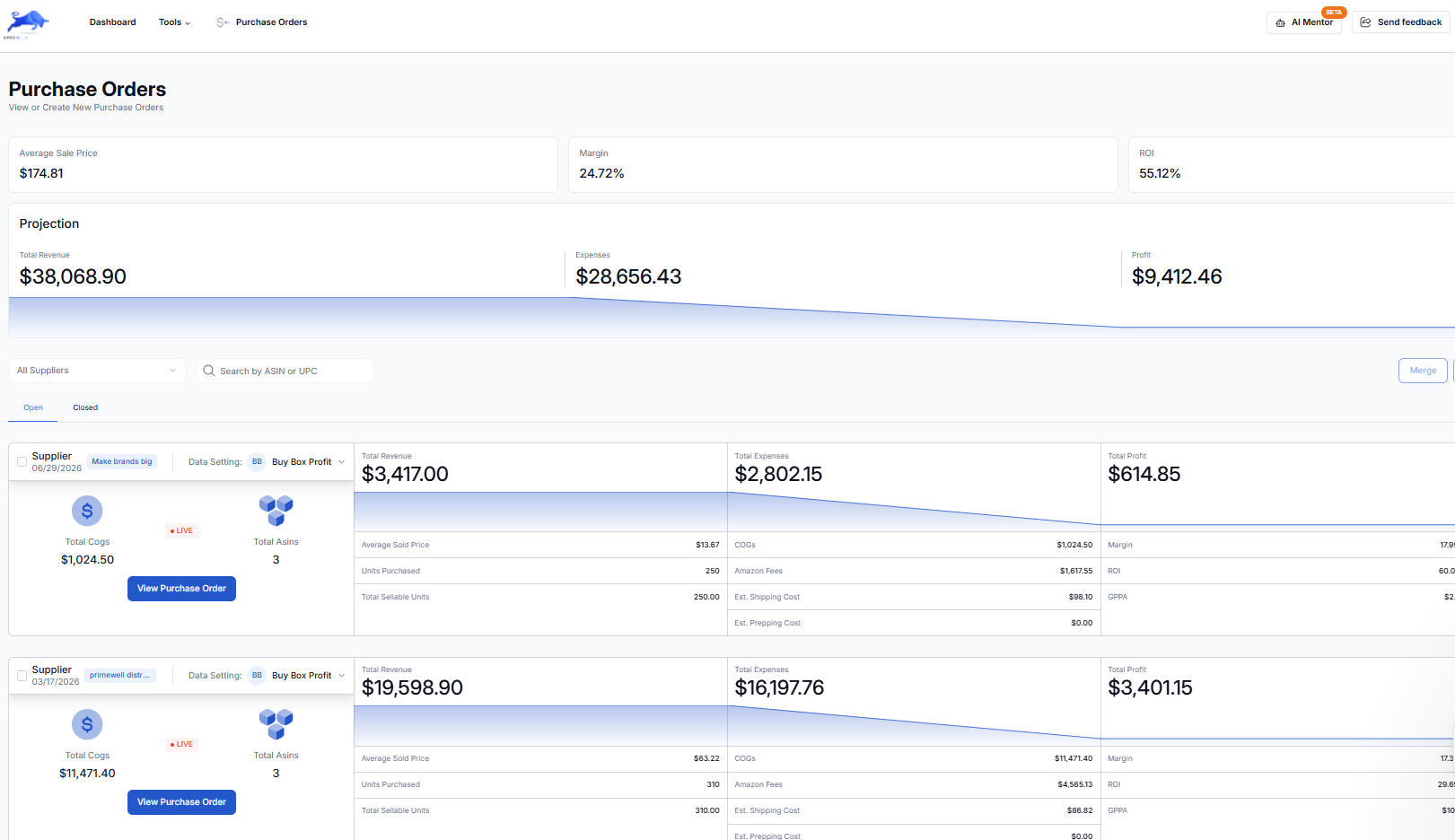
Calculating true landed cost, product cost plus shipping plus prep fees plus Amazon's referral and fulfillment fees, is pure arithmetic once the inputs are known. There is no reason this should ever be done manually in a spreadsheet formula rebuilt for every product. Automating this at the point a purchase order is created, rather than reconstructing it after the sale, is what prevents the margin blindness covered in our profit margins guide.
Restock alerts and reorder triggers
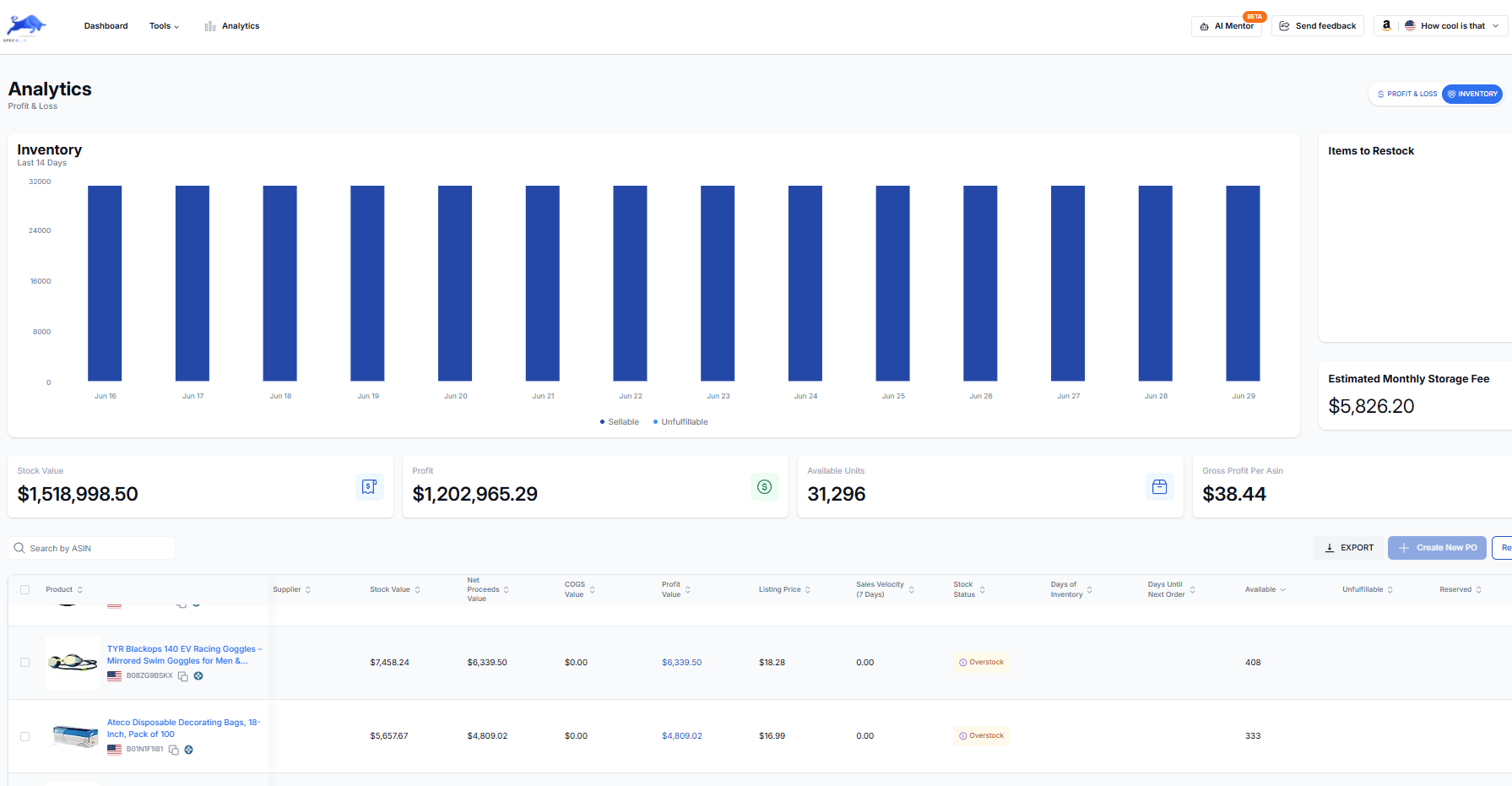
Deciding when a proven SKU needs a reorder is a math problem based on sales velocity and supplier lead time, not a judgment call requiring deep human thought. Automating the alert, while leaving the actual decision to place the order with the seller, strikes the right balance: the system tells you when action is needed, and you decide the size and timing of the response based on current cash flow and priorities.
Supplier catalog matching and product vetting
Scanning a distributor's full price list against Amazon's current listing data by hand, product by product, does not scale past a handful of SKUs. Automating the landed cost, ROI, and margin calculation across an entire catalog at once, the way Apex Green's UPC Scanner and Master Catalog do, turns a task that used to take hours into one that takes minutes, without removing the human judgment of which products actually look worth pursuing.
Ready to put this into practice?
Apex Black, Blue, Green & Red connect sourcing, purchasing, and profit tracking into one suite. Start your 7-day free trial, no card charged until it ends.
Start Free TrialWhat should never be fully automated
- The decision to trust a new supplier, which depends on communication quality and business judgment a system cannot fully assess.
- Final approval on a large purchase order, since capital allocation decisions deserve a deliberate human check even when the math checks out.
- Responding to an Amazon suspension notification, which requires understanding the specific nuance of the situation rather than a templated response.
- Negotiating terms with a distributor, which is a relationship building conversation, not a formula.
Why fragmented automation is often worse than none at all
Automating one process in isolation, such as review requests through one tool while margin tracking still lives in a separate spreadsheet, produces a partial improvement but does not fix the underlying fragmentation problem covered in our cost of stacking seller software guide. Real operational relief comes from automation that is connected across sourcing, purchasing, and inventory, not automation that exists as one more disconnected subscription layered on top of an already scattered process.
Frequently asked questions about Amazon wholesale automation
Is Amazon wholesale automation expensive to set up?
It depends on whether it is built as one connected system or stitched together from separate tools. A connected suite tends to cost less in total than the equivalent stack of standalone automation tools, which we break down with real numbers in our software cost comparison.
Can a completely automated Amazon wholesale business run itself?
Not entirely, and treating it as fully hands off is a common mistake. Automation removes the repetitive tracking and calculation work, but sourcing judgment, supplier relationships, and capital decisions still require a human, especially as the business scales into new categories.
What should a new wholesale seller automate first?
Review requests and margin calculation, in that order, since both are low judgment, high repetition tasks that produce an immediate, measurable benefit once automated, well before a seller has enough supplier volume to need advanced inventory automation.
Ready to put this into practice?
Apex Black, Blue, Green & Red connect sourcing, purchasing, and profit tracking into one suite. Start your 7-day free trial, no card charged until it ends.
Start Free Trial